
The Challenge
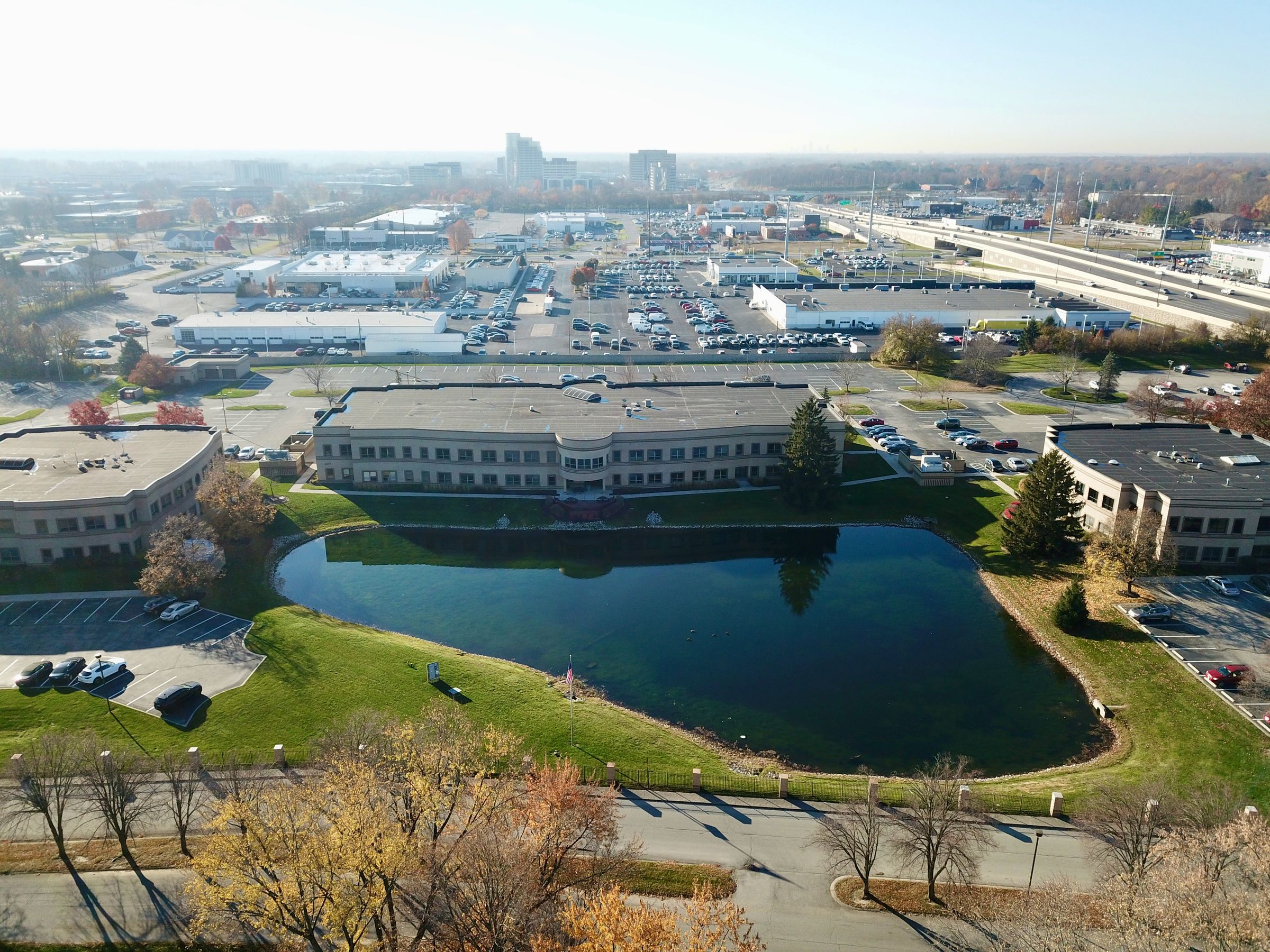
Keystone Office Park is a 116,592 RSF, five-building office park. When SRG took on landlord representation two years ago, occupancy sat at 63%. The property had soft demand, an aging tenant base, and the kind of leasing inertia that compounds quickly. Empty floors don’t attract new tenants. Existing tenants question their renewal when they see vacancy stretching across the property. Without intervention, occupancy was on track to decay further, not recover.
The Approach
A multi-building office park turnaround at this scale runs on three principles:
Steady marketing presence
LoopNet, Crexi, and CoStar are table stakes. The differentiator is direct outreach to the active office tenant community in Central Indiana, plus broker network activation across firms that serve mid-market office tenants. Visibility to every active tenant in the market, every week.
Disciplined leasing economics
Each deal evaluated against the property’s long-term financial position, not just the short-term occupancy number. SRG worked with KOP ownership to evaluate where the property fit in the market and devised a two-tier pricing strategy. Tier one: a ‘value’ rate paired with a spec refresh — new carpet, paint, and LED lights — for tenants who could take a space in as-is or near-as-is form. Tier two: a more traditional pricing orientation for tenants who needed to re-work the space. If walls have to move, the rate accounts for that. If a tenant takes a layout as-is, they get better value. The result: Class B+ finish levels at a value feel, with pricing that fairly reflects the work required for each deal.
Tenant retention as a leasing strategy
Renewals matter as much as new leases. A 90% occupancy that requires 30 new transactions a year is a worse outcome than 90% built on renewals plus targeted new tenancy. SRG worked the existing tenant base as hard as the prospect pipeline.
Working across the stakeholder structure
KOP is owned by an out-of-state institutional owner and managed day-to-day by a third-party property management firm separate from SRG. SRG interfaces directly with the owner’s leasing and asset management teams on every deal, and with the on-site PM and maintenance team on every tenant transition. Multi-party stakeholder coordination is part of what gets the deals done.
The Outcome
Occupancy moved from 63% to 90% over two years. 37 lease transactions completed so far, including both new tenants and renewals. The property now operates as one of the more leased-up assets in its submarket — which makes future leasing easier, future renewals less contested, and future capital decisions more informed.
The engagement is ongoing. Active landlord representation continues as the property approaches a stable occupancy plateau.
Key Results
- Occupancy moved from 63% to 90% over two years of SRG representation
- 37 lease transactions completed so far, mix of new tenants and renewals
- Multi-building, multi-tenant landlord representation across 116,592 RSF
- Existing tenant base stabilized and expanded through proactive renewal management
- Active engagement, ongoing